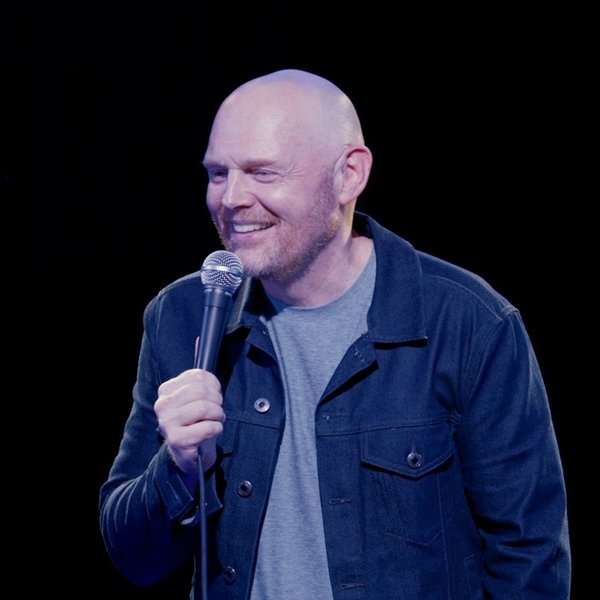
Bill Burr
Standup comedy, Monday Morning Podcast, working-class blue-collar humor
@BillBurrOfficialThis profile is journalistic coverage, not an endorsement.
Why He Matters
Bill Burr is widely considered one of the best standup comedians alive. His Monday Morning Podcast started in 2007 and is still running — one of the longest-running solo podcasts ever.
For men trying to develop their own voice, Burr is a masterclass in being honest, self-deprecating, and angry without becoming cynical. His comedy comes from a real, examined life rather than performed personas.
What to Watch For
His specials Walk Your Way Out (2017) and Paper Tiger (2019) are essential viewing. F is for Family on Netflix shows his range as a writer. His ability to handle a hostile crowd is legendary.
Key Takeaways
What his work teaches if you want to grow in standup mastery:
- Self-examination is the substance under angry comedy — Most “angry comic” personas are shtick. Genuine self-reflection is what makes the angry material land instead of grate.
- Honesty about your own contradictions earns license — Audiences forgive sharp takes when the comic acknowledges his own role in the same problems.
- Daily output beats peak output — Monday Morning Podcast for over 18 years is itself the achievement. Most consistency stories die at year three.
- Hostility from the room is a skill input, not a setback — The 12-minute Philly bit became one of the most-watched standup clips ever. Lean into the conditions; don’t avoid them.
How Bill Burr Became Successful
The drivers behind his growth that are worth copying:
- Four-decade standup foundation — The chops that the podcast era audience now sees took 30+ years to build. The work compounds.
- Solo podcast as a discipline experiment — Monday Morning Podcast has run weekly with minimal interruption for 18 years. The format is its own moat.
- Multi-format career — Standup, F is for Family, Old Dads, regular acting credits. Cross-medium presence keeps the brand fresh.
- Refusing to soften with mainstream success — Most comics flatten their voice as audiences grow. He didn’t, which kept long-time fans loyal through scale.
How He Built It
Burr started in Boston comedy in the early 1990s and moved to New York in the late 90s. The Philadelphia incident in 2006 — where a hostile crowd booed multiple comics off the stage and Burr held the room for 12 minutes by attacking the city — became one of the most-watched standup clips ever and established his reputation for handling pressure. The Monday Morning Podcast launched in 2007 and ran weekly with minimal interruption for nearly two decades, predating the modern podcast boom by years.
Each special compounded the audience without compromising material. By the late 2010s, Burr was selling out Madison Square Garden and Hollywood Bowl multiple nights — a venue tier most comics never reach.
What Makes Him Different
Self-examination. Most “angry comic” personas burn out or harden into shtick. Burr publicly worked through his own anger, marriage dynamics, parenting, and worldview on the podcast for years. The self-awareness made the angry material land harder because audiences trusted he wasn’t just performing.
The Monday Morning Podcast is unusual: solo, unedited, no guests for most of the run, no production polish. Just Bill ranting into a microphone for an hour. That sustained for 18+ years says something about the discipline behind the persona.
Critical Take
The political content over the years has shifted in tone. Some long-time fans feel he’s softened on subjects he used to hammer; others feel he’s matured. Both readings are defensible.
Some bits from earlier specials don’t hold up by current standards. Burr addresses some of this in newer material directly, sometimes well, sometimes less so.
What Beginners Get Wrong
The “angry guy” register is the surface. The substance is honest observation built on years of self-reflection. Comics who copy the volume and irritation without the underlying examination produce material that reads as bitter rather than insightful.
The other miss: thinking the podcast is the comedy. The standup is the comedy. The podcast is where the underlying worldview gets stress-tested in long form. Both feed each other.
Related Creators
Peer comics in the same era and lane: Joe Rogan, Tom Segura, Bert Kreischer, Theo Von, Andrew Schulz, and Shane Gillis.