
Softmaxxing vs Hardmaxxing: What's the Difference?
Softmaxxing vs hardmaxxing explained. Cost, risk, results timeline, and a decision framework to figure out which approach fits you.
Softmaxxing vs Hardmaxxing: The Quick Answer
If you’ve spent any time in looksmaxxing communities, you’ve seen these two terms thrown around constantly. Here’s the short version:
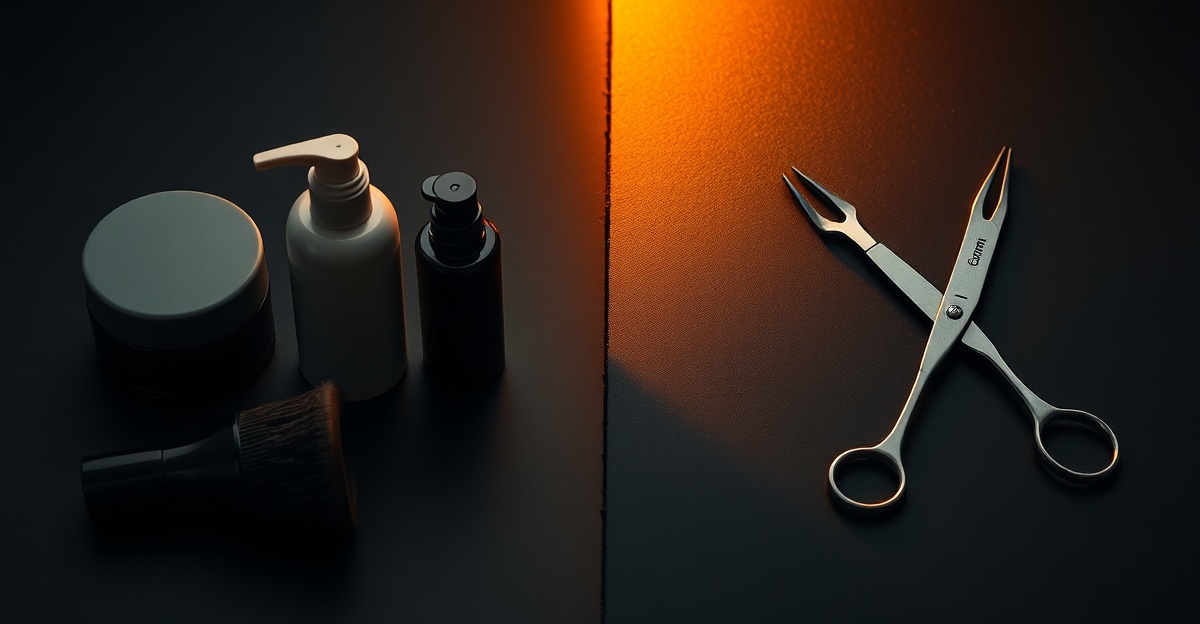
Softmaxxing is everything you can do without surgery or invasive procedures. Skincare, grooming, fitness, style, posture, sleep optimization. Low cost, low risk, high effort over time.
Hardmaxxing is the surgical and medical route. Rhinoplasty, jaw implants, hair transplants, orthodontics, dermal fillers. Higher cost, higher risk, faster visible results.
Most guys don’t need to pick one or the other. The smartest approach is usually softmaxxing first, then deciding if hardmaxxing makes sense for specific things that grooming and fitness can’t fix.
What Counts as Softmaxxing?
Softmaxxing covers a massive range. Think of it as maximizing what you already have.
Skincare. A basic routine — cleanser, moisturizer, SPF — does more for your face than most people realize. Tretinoin (prescription retinoid) is the gold standard for anti-aging — decades of clinical evidence for killing wrinkles and boosting collagen (Harvard Health, 2023) — and the generic version costs almost nothing.
Fitness. Building muscle changes your face. Seriously. Lower body fat reveals jaw definition, broader shoulders improve your frame, and the posture improvements from lifting are immediate.
Grooming. Haircut that suits your face shape, eyebrow maintenance, beard optimization (or clean shave if your facial hair is patchy). These are free or cheap and make a noticeable difference.
Style. Clothes that fit your body type, a cohesive color palette, shoes that aren’t falling apart. You don’t need to spend a lot — you need to be intentional.
Mewing and posture. Proper tongue posture and overall body posture won’t reshape your skull overnight (despite what some forums claim), but they absolutely affect how your face photographs and how you carry yourself.
Sleep and nutrition. Dark circles, dull skin, and a puffy face are often just sleep deprivation and a garbage diet. Fixing these is free and the results show within weeks.
What Counts as Hardmaxxing?
Hardmaxxing is any procedure that physically alters your structure. It ranges from relatively minor to serious surgery.
Lower-tier hardmaxxing (less invasive):
- Orthodontics/braces (including Invisalign)
- Minoxidil and finasteride for hair loss
- Chemical peels and microneedling
- Botox and dermal fillers
- Teeth whitening and veneers
Mid-tier hardmaxxing:
- Rhinoplasty (nose job)
- Hair transplant (FUE/FUT)
- Otoplasty (ear pinning)
- Laser skin resurfacing
Heavy hardmaxxing:
- Jaw implants or sliding genioplasty
- Orthognathic (jaw) surgery
- Buccal fat removal
- Blepharoplasty (eyelid surgery)
- Canthoplasty (eye shape alteration)
Each of these carries real surgical risks. Botched results exist, recovery takes time, and costs add up fast.
The Side-by-Side Comparison
| Factor | Softmaxxing | Hardmaxxing |
|---|---|---|
| Cost | $0 – $200/month | $2,000 – $30,000+ per procedure |
| Risk | Essentially zero | Surgical complications, scarring, bad results |
| Time to results | 3-12 months | Immediate to 6 months (post-swelling) |
| Reversibility | Fully reversible | Often permanent or difficult to reverse |
| Maintenance | Ongoing effort required | Usually one-time (some need touch-ups) |
| Ceiling | Limited by genetics | Can alter structure beyond natural limits |
| Who benefits | Everyone, no exceptions | People with specific structural concerns |
| Social perception | Universally positive | Mixed — some stigma still exists |
The Realistic Results You Can Expect
Softmaxxing won’t turn a 4 into a 9. But it will reliably move most guys up 1.5 to 2.5 points on whatever rating scale you care about. And that’s not a small thing — going from a 5 to a 7 changes how people treat you. The halo effect research backs this up.
Hardmaxxing can deliver more dramatic changes for specific features. A well-done rhinoplasty on someone with a clearly disproportionate nose can be transformative. A hair transplant for someone in Norwood 3-4 territory can take years off their appearance.
But here’s what the forums don’t tell you: hardmaxxing on top of a neglected softmax foundation is a waste of money. Getting jaw implants while you’re 25% body fat, have bad skin, and dress like you’re still in middle school is like putting a spoiler on a car with flat tires.
The Decision Framework
Ask yourself these questions in order:
1. Have you maxed out your softmaxxing basics? If you’re not consistently doing skincare, working out 3-4x per week, eating properly, sleeping 7-8 hours, and dressing intentionally — start there. You haven’t earned the right to evaluate hardmaxxing yet because you don’t know what your real baseline looks like.
2. Is there a specific feature holding you back? Hardmaxxing makes sense when there’s a clear, identifiable feature that grooming and fitness can’t address. A significantly deviated septum, receding hairline, or genuinely recessed jaw. Vague dissatisfaction is not a surgical indication — that’s usually body dysmorphia territory.
3. Can you afford it without financial stress? If getting a procedure means going into debt or delaying other life goals, the answer is no. Softmaxxing while you save is always the right call.
4. Are your expectations realistic? Talk to people who’ve had the procedure. Look at realistic before/after photos (not the curated ones on surgeon websites). Understand that results vary and revision surgery is sometimes needed.
5. Have you given it at least 6-12 months of thought? Impulsive cosmetic decisions are almost always regretted. If you wanted rhinoplasty 6 months ago and still want it after thoroughly researching surgeons and results — that’s a different situation than seeing a TikTok yesterday and booking a consultation today.
What the Community Gets Wrong
The biggest mistake in looksmaxxing spaces is treating hardmaxxing as the “real” looksmaxxing and softmaxxing as cope. This is backwards.
Softmaxxing is the foundation. It affects every single day of your life, it’s sustainable, and it compounds over time. A guy who lifts, has good skin, dresses well, and carries himself with confidence is going to outperform a guy who got one procedure but neglects everything else.
The second mistake is rating-obsessed thinking. “I need to go from a 6.2 to a 7.5 so I need exactly this procedure.” Real life doesn’t work on decimal scales. Attractiveness is contextual, subjective, and heavily influenced by non-physical factors like confidence, social skills, and status.
The Bottom Line
Start with softmaxxing. Everyone should. It’s free or cheap, zero risk, and you’ll see meaningful results within months.
If after fully committing to softmaxxing for at least 6-12 months, there’s a specific structural feature you want to change — and you can afford it without stress — then researching hardmaxxing options is reasonable.
The best results come from stacking both: a solid softmaxxing foundation with targeted hardmaxxing for specific features that genuinely bother you. Not the other way around.
Your face isn’t a project with a deadline. It’s a long game. Play it smart.
Frequently Asked Questions
What is the difference between softmaxxing and hardmaxxing?
Softmaxxing is everything you can do without surgery — skincare, gym, haircut, style, sleep, posture. Hardmaxxing is procedures that physically alter you: rhinoplasty, hair transplant, jaw surgery, fillers, orthodontics. The short version: softmaxxing is cheap and reversible and you can quit anytime. Hardmaxxing costs real money, takes months to settle, and you're stuck with the result.
Should I start with softmaxxing or hardmaxxing?
Softmaxxing, always. Most guys considering hardmaxxing are 6-12 months of consistent gym, skincare, and grooming away from realizing they didn't need surgery. Get to 12-15% body fat with clean skin and a real haircut before you can even tell what your face actually looks like.
Is hardmaxxing worth it?
Only when a specific feature is clearly holding back an otherwise softmaxxed face. A bad nose on lean skin is the textbook case. Vague dissatisfaction is not — that's body dysmorphia, and surgery makes it worse, not better.
How much does each cost?
Softmaxxing runs $0-200/month forever (gym, skincare, occasional haircut). Hardmaxxing runs $2-4k for a Turkey hair transplant, $8-15k for rhinoplasty in the US, and $30k+ for orthognathic jaw surgery. Recovery time is the hidden cost — rhinoplasty looks final at 12-18 months, not 3 weeks.
Can softmaxxing alone get me significant results?
Yes. Most adults gain 1-2 PSL points if they actually commit — a tier shift, but not Photoshop territory. The biggest levers are body fat, skin, haircut, and clothes that fit. Skip those for trendy techniques and you'll waste a year.
What's the biggest mistake people make?
Treating hardmaxxing as 'real' looksmaxxing and softmaxxing as cope. It's backwards. A guy with surgery on a neglected base looks worse than a guy who lifts, has clean skin, and dresses well. Stack them in the right order or don't bother.
How long until I see results from each?
Softmaxxing: visible skin and physique changes in 8-12 weeks, full results at 6-12 months. Hardmaxxing: immediate to 3 weeks for fillers and minor work, 6-18 months for rhinoplasty and jaw surgery to settle. Hair transplants shed for 3 months before regrowth starts.