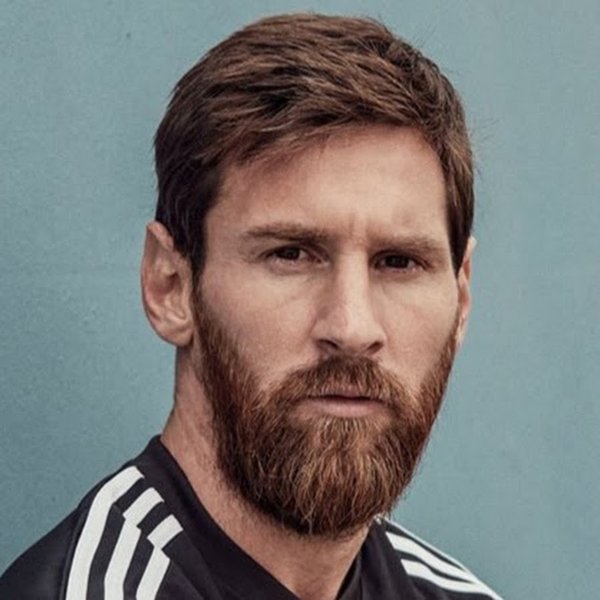
Lionel Messi
GOAT-tier football technique, Inter Miami, World Cup winner, Argentine icon
@leomessiThis profile is journalistic coverage, not an endorsement.
Why He Matters
Lionel Messi is widely considered the greatest football player ever. The 2022 World Cup win completed the one achievement that had eluded him for two decades. His move to Inter Miami in 2023 transformed American soccer commercially.
His version of greatness looks different from Ronaldo’s. Where Ronaldo is loud, obsessive, and performs his work ethic, Messi is quiet, consistent, and almost invisible about process. Both paths work. Both produce greatness.
What to Watch For
For men figuring out their own style, Messi is proof that quiet confidence and genuine skill beat performed intensity at the highest level. His commercial partnerships (Adidas, Pepsi, Apple TV) are substantial but secondary to his actual sport.
Key Takeaways
What his work teaches if you want to grow in mastery and elite sport:
- Quiet competence outperforms loud performance — Most successful people perform their work ethic. Doing the work without performing it is a viable alternative path.
- Specialization compounds across decades — Two-footedness is a fine goal. Becoming the best in the world at something specific produces categorically different outcomes.
- Loyalty to the apparatus that built you — Two decades at Barcelona was a financial sacrifice. The career and the legend it produced wouldn’t exist with peer-tier club-hopping.
- Most “improvisation” is rehearsed pattern — Watching his “magic” closely reveals movements he’s done thousands of times. Genius is preparation that looks effortless.
How Lionel Messi Became Successful
The drivers behind his growth that are worth copying:
- Early-stage institutional investment — La Masia’s growth-hormone treatment and developmental program at age 13 made the rest possible. Sometimes the breakthrough is the apparatus, not the talent.
- Two-decade compounding at one club — Most elite players move every 4-6 years. Staying allowed Barcelona’s system and his game to co-evolve in ways no transfer could match.
- Patience with the international trophy — He played 16 years for Argentina before winning the World Cup. Not quitting in the face of repeated failure is itself the lesson.
- Late-career commercial pivot — Inter Miami reframed American soccer commercially. The post-Europe chapter created another decade of cultural relevance.
How He Built It
Messi joined Barcelona’s La Masia academy at 13, after the club agreed to pay for the growth-hormone treatment his family couldn’t afford. The development arc through Barcelona’s youth ranks, the first-team debut at 17, and the steady ascension to the world’s top player in his early 20s is one of football’s most-documented developmental stories. The discipline that’s harder to see is staying at one club for two decades while peers maneuvered for bigger contracts.
The 2022 World Cup victory with Argentina is the single moment that completed the legacy. Before it, the GOAT debate was perpetually unsettled. After, the case is closed for most observers.
The Inter Miami move in 2023 reframed American soccer commercially. MLS attendance, jersey sales, and broadcast deals all moved up notably after his arrival. Apple’s MLS Season Pass deal was structured around him.
What Makes Him Different
Quiet competence. Sports stars at the top tier almost always perform their work ethic — Cristiano’s gym videos, training routine documentation, motivational quotes. Messi doesn’t. The training happens; the public visibility doesn’t. That’s a defensible style choice and the results validate it.
Left-foot specialization is also distinctive. Most elite players develop two-footed competence. Messi played his entire career heavily left-footed and never needed to expand. The specificity is part of why the playing style was so legible.
Critical Take
The tax fraud convictions in Spain (2016, settled) and the off-field decisions are part of the public record, even if they’ve been overshadowed by the trophies. Reasonable people land in different places on how to weigh these.
The Inter Miami chapter has produced great moments but also raised questions about MLS competitive standards — leagues built around one star don’t always grow the underlying competition.
What Beginners Get Wrong
People watch his playing style and assume the genius is improvisational. Closer film study reveals he plays inside heavily-rehearsed patterns, with most “magical” moments being prepared movements he’s run hundreds of times. The genius is in the prep, not the spontaneity.
For young athletes: Messi’s path is harder to copy than Ronaldo’s because the latter is process-replicable (lift, sprint, document, repeat) while the former requires natural ball control developed in a specific developmental window. Don’t try to be Messi if you weren’t already on that trajectory at 12.
Related Creators
For peer-tier athlete-creators: Cristiano Ronaldo, The Rock (the cross-sport entertainment crossover), and Bryan Johnson for an analogous “process over performance” approach in a different field.