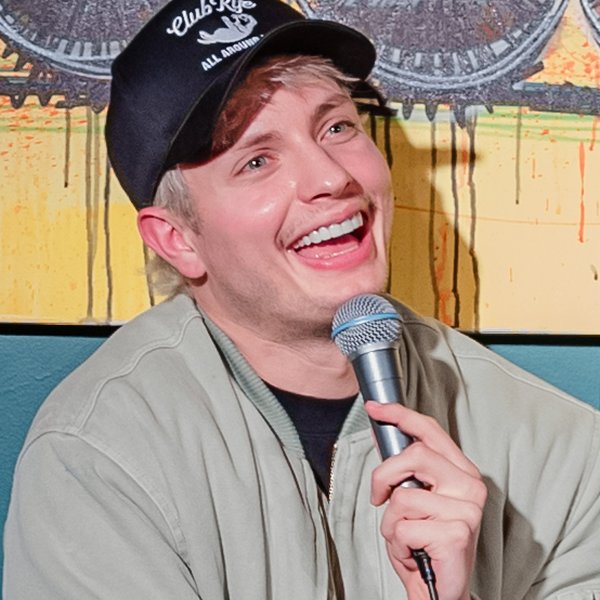
Matt Rife
Crowd work standup, viral TikTok clips, mainstream breakthrough
@mattrifeThis profile is journalistic coverage, not an endorsement.
Why He Matters
Matt Rife became the most TikTok-famous comedian of his generation. His crowd work videos — short, dense interactions with audience members — get millions of views per clip and have funded sold-out arena tours.
He represents how standup comedians can use short-form video to build an audience faster than traditional comedy paths allow.
What to Watch For
His 2023 Netflix special Natural Selection generated significant controversy and discussion. His ability to think on his feet during crowd work is genuinely impressive. His business has scaled faster than most comedians’ careers.
Key Takeaways
What his work teaches if you want to grow in improvisation and viral comedy:
- Crowd-work craft is real, not gimmick — The clips work because the underlying improv timing is dialed from thousands of nights. The visible “natural” response is rehearsed reflex.
- Distribution-first content strategy — Build for clips first, specials second. Reverses the traditional comedy career path but matches modern attention markets.
- Apology calibration matters — How you respond to backlash on a controversial bit shapes the next decade more than the bit itself.
- Don’t confuse follower count with skill — Younger audiences arrived via clips, not via standup chops. The base of skill underneath has to keep growing or the audience moves on.
How Matt Rife Became Successful
The drivers behind his growth that are worth copying:
- Pre-viral standup foundation — A decade of comedy clubs built the timing that the TikTok era discovered.
- Algorithm-perfect crowd-work format — Setup in the question, punchline in 8 seconds, no context needed. Built for short-form discovery.
- Audience-segment capture — Younger and female-skewed audience that male-coded comedy podcasting didn’t serve. Niche fit compounded fast.
- Stadium-tier velocity — Months from clubs to arenas. Compressed reach unlike anything in normal comedy career arcs.
How He Built It
Rife had a long stretch of standup grind — Wild ‘N Out, small clubs, multiple failed pilots — before the TikTok explosion in 2022-2023. The clips that broke through were tight crowd-work segments where he’d improvise sharp lines off audience comments. The format was perfectly tuned for short-form: setup in the question, punchline in 8 seconds, no context needed.
The compounded reach was extreme. Within months, he went from filling small clubs to filling arenas. Few comics have moved up the venue ladder that fast.
What Makes Him Different
Speed of thought. Rife’s crowd work isn’t memorized material; it’s genuine improvisation tuned by hundreds of nights doing it. The willingness to take any audience comment as material, no matter how awkward, separates him from comics who default to scripted bits when crowds get unpredictable.
The TikTok-native distribution stack also makes him different. Most peers use clips to market specials; Rife built the audience on clips first and the special model came after.
Critical Take
Natural Selection opened with a domestic-violence joke that drew sustained backlash. Rife’s response — sarcastic and dismissive — escalated the discussion rather than defusing it. Reasonable observers landed in different places on whether the joke was edgy comedy or punching down. The episode is now a case study in how a comic handles (or mishandles) cancellation pressure.
The TikTok-driven audience skews young and female-heavy, which has created friction with male-coded comedy podcasting peers who initially didn’t take him seriously. His response has been to keep working and let the venue sizes speak.
What Beginners Get Wrong
People see the clips and think “good-looking guy gets clips, fills arenas.” That misreads the path. The good-looking-guy crowd-work clips work because the underlying improv timing is dialed. Comics who try to copy the path with weaker material get followers but not arena gigs.
Related Creators
For comparison: Andrew Schulz (peer crowd-work-heavy comic, longer runway), Theo Von (different tonal lane), Shane Gillis, and Bert Kreischer.