
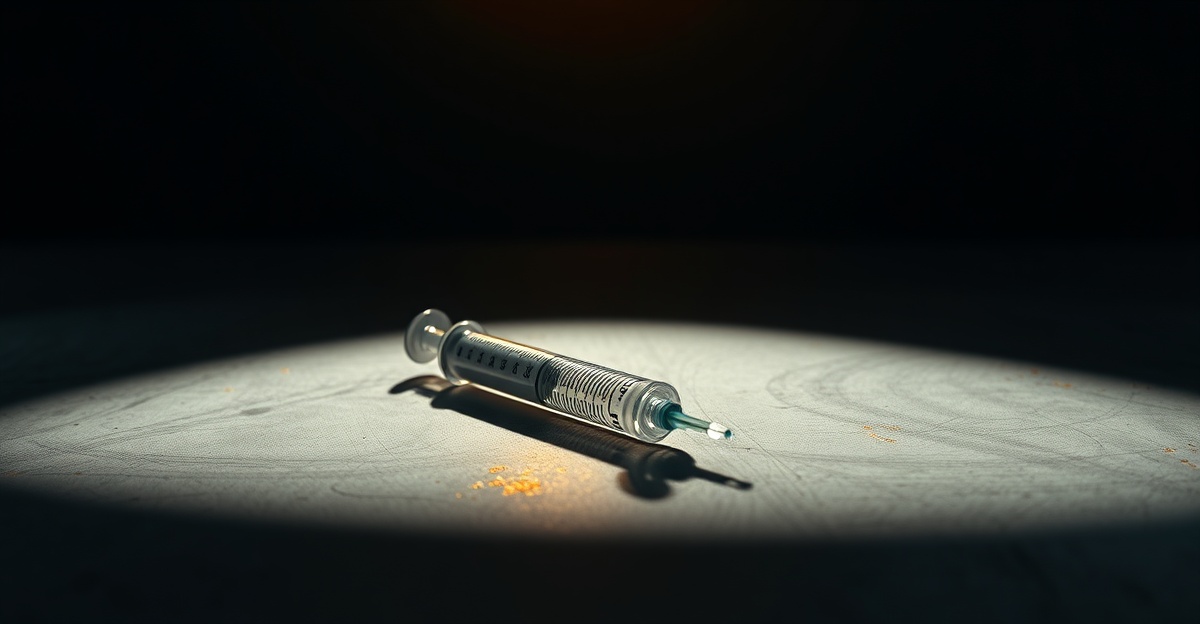
The Clavicular Aqualyx Incident: What Was Injected, and Why It's a Criminal Act
Braden Peters injected influencer Jenny Popach with Aqualyx — a prescription-only fat-dissolving acid — on a livestream in 2026. We explain what Aqualyx is, why injecting it outside a licensed clinical setting is criminal in most jurisdictions, and what the medical risks are when an unqualified person performs the procedure.
In 2026, on a Kick stream, Braden Eric Peters, online as Clavicular, injected TikTok creator Jenny Popach with Aqualyx. The clip is referenced in the Wikipedia article on Peters and in contemporaneous coverage of his subsequent platform bans. Peters is not a licensed cosmetic provider. The act is illegal in essentially every jurisdiction with cosmetic-regulation frameworks. The medical risk is non-trivial. This piece explains what Aqualyx is, why injecting it outside a clinic is a serious offense, and what the broader looksmaxxing-creator pattern around injectables looks like.
What Aqualyx actually is
Aqualyx is a branded injectable formulation of sodium deoxycholate (a bile-acid derivative) combined with stabilizers and a small amount of lidocaine. The mechanism is straightforward: deoxycholate disrupts the membranes of adipocytes (fat cells) at the injection site, causing them to release their lipid contents, which are then cleared by the lymphatic system. The effect is localized fat reduction over weeks following the injection.
Clinically it is used for small pockets of stubborn subcutaneous fat, under-chin fullness, jowls, jawline definition, sometimes small body areas like flanks or armpit fat. In licensed UK cosmetic practice it is administered by GMC-registered doctors, GDC-registered dentists, or NMC-registered nurses with prescribing authority, in clinical settings, after consultation and consent processes.
The compound closely resembles Kybella, the brand name under which a deoxycholic acid formulation is FDA-approved in the United States, but only Kybella has the FDA approval. Aqualyx itself is used in the US under physician discretion in compounding contexts; the regulatory environment is messier than the UK and EU.
Why unlicensed injection is criminal
Three regulatory frames converge. None of them are ambiguous.
Restricted distribution. Aqualyx is a CE-marked Class III medical device in the UK and EU, distributed under regulation that restricts it to use by medical professionals; sodium deoxycholate itself is also captured by medicines law when intended for human administration. Either route makes administration by an unlicensed person legally actionable, with MHRA and the Joint Council for Cosmetic Practitioners both having issued public warnings about its sale and use via unregulated channels. The Joint Council for Cosmetic Practitioners and the British Association of Aesthetic Plastic Surgeons have both repeatedly published positions on unlicensed injection as criminal.
Practice of medicine without a license. In most US states and in most developed jurisdictions, injecting a prescription medication for cosmetic purposes is the practice of medicine. Performing it without licensure is typically charged as a misdemeanor, escalating to a felony when serious bodily injury results, when there is fraudulent misrepresentation, or when state law specifically classifies cosmetic injection as a felony offense. Civil liability applies in essentially all jurisdictions.
Cosmetic-procedure regulation. Several UK and EU jurisdictions have specific cosmetic-procedure legislation requiring practitioners to hold qualifications and operate in regulated premises. The UK’s licensing regime is being expanded under the 2024 Cosmetic Procedures licensing scheme; injectable procedures are explicitly within scope.
The consent of the recipient does not provide a defense in any of these frames. Informed consent has a clinical definition, a qualified clinician explaining specific risks, alternatives, and the patient’s right to refuse, and a teenager-adjacent influencer agreeing to be injected on stream does not satisfy it. The legal exposure is on the person performing the procedure regardless of what the recipient said.
What actually happens to a body when this goes wrong
Aqualyx in trained hands has a tolerable safety profile. The risks are well-documented and manageable in clinical settings. Outside those settings the risks change category.
Common adverse events (also seen with licensed administration, but more frequent with unlicensed): swelling, bruising, redness, temporary nodules at the injection site, mild pain. These typically resolve in days to a few weeks.
Procedure-related risks that anatomy training prevents include accidental injection into vessels, salivary glands, or nerves. In the under-chin and jawline area, the most common Aqualyx target, the marginal mandibular branch of the facial nerve runs close to the standard injection plane. Damage produces lip asymmetry that can take months to resolve and sometimes does not fully resolve. The facial artery and vein are nearby; intravascular injection of a detergent like sodium deoxycholate causes direct chemical injury to the vessel wall and downstream tissue necrosis, with severity dependent on volume and location.
Infection. Injectables in non-sterile environments routinely produce infections that range from superficial cellulitis to deep abscesses requiring surgical drainage. UK regulators have documented cases requiring hospital admission and IV antibiotics following unlicensed cosmetic injection in non-clinical settings.
Nodules and chronic granulomas. The body’s immune response to mis-administered deoxycholate or to contaminants in the injection can produce persistent firm nodules under the skin that may require surgical excision.
Vision loss (a dermal-filler risk, not an Aqualyx risk). The published literature has documented vision loss when viscous dermal-filler material reaches the ophthalmic artery via anastomoses with facial vessels. Aqualyx is a liquid detergent and not a filler; no analogous Aqualyx-specific ophthalmic cases are documented. We mention the filler risk because Aqualyx is routinely confused with fillers in social-media demonstrations, and viewers considering injectable cosmetic treatment of any kind should know the broader anatomical risk class.
A streamroom injection has none of the safeguards: no consultation, no anatomical knowledge in the operator, no sterile technique, no immediate access to reversal or rescue, no clinical record for follow-up. The recipient is on their own if anything goes wrong.
Where this fits in the broader looksmaxxing pattern
Three structural points about why this matters past the one incident.
The looksmaxxing creator economy includes a sub-genre of injectables advocacy. Multiple TikTok and Instagram creators routinely demonstrate or recommend fat-dissolving, dermal filler, and “skinny shot” injections. UK regulators have flagged this category specifically; the MHRA and JCCP have issued warnings repeatedly. The Clavicular incident is the most-discussed example because of who he is, not because the practice is unique to him.
The audience overlap with adolescents is direct. TikTok internal data cited by Time magazine showed 18–24-year-old male looksmaxxing search volume of 1.9 million per day in March 2026. Child psychologists are seeing patients as young as 10 in this content. Injectable demonstrations in this audience normalize a procedure that, even in licensed hands, has been associated with body-image worsening in younger users, a documented phenomenon in cosmetic-procedure dysmorphia research.
Platform enforcement is reactive. Kick did not ban Peters for the Aqualyx injection specifically; the platform banned him for the Fort Lauderdale assault incident. YouTube terminated his channels for “severe or repeated violations” without singling out any one act. The injection is normalized partly because the platforms do not have a specific enforcement framework for unlicensed medical practice on stream.
What the right response looks like
For viewers who saw the clip and considered booking an injectable themselves:
- Use a licensed clinic. In the UK, look for JCCP-registered practitioners or doctors on the GMC Specialist Register in cosmetic dermatology or plastic surgery. In the US, look for board-certified dermatologists, plastic surgeons, or licensed providers operating within state-board rules.
- Consultation first. A legitimate cosmetic clinician will require a consultation, will ask about medications and medical history, will explain risks, and will document consent on a form.
- Reasonable expectations. Aqualyx is for small focal fat pockets, not generalized weight loss. A clinic that promises body contouring through injection alone is misleading you.
- Cost reality. Licensed Aqualyx treatment costs more than a streamroom injection. The cost of a hospital admission for complications dwarfs the cost of a single licensed visit. The math is not close.
For parents who have seen their teenager consume this content:
- The conversation pattern from our parents’ guide applies. Injectables interest in a 14- or 16-year-old is a clinical concern, not a discipline issue. Pediatrician first, mental-health referral if appearance-driven anxiety is the underlying driver.
- Procedural age limits exist. Most licensed providers will not perform cosmetic injections on minors except for specific medical indications. A teenager asking about Aqualyx is asking about a procedure that legitimate providers will refuse. The places that say yes are the places to avoid.
For platforms hosting looksmaxxing content:
- Unlicensed medical practice on stream is a category that the current Community Guidelines frameworks do not enforce against consistently. The Clavicular Aqualyx incident is one of several pieces of evidence that the gap is structural and known. We have no specific recommendation; the observation is that the gap exists and the harm runs through it.
The bottom line
A streamer injected an influencer with a prescription medication on camera. The procedure was illegal under multiple regulatory frames. The recipient survived without obvious harm in this instance; the next person attempting to replicate it at home may not. Our looksmaxxing dangers piece covers the broader clinical landscape; this incident is one data point inside it. The right response is to consume injectable content with the same skepticism you would apply to any unregulated medical advice, and to source actual procedures from actual clinicians.
Sources: Wikipedia, Clavicular (influencer), Sportskeeda, News What Happened Clavicular Jenny Popach. Additional regulatory context from the UK Joint Council for Cosmetic Practitioners (JCCP) public guidance and Medicines and Healthcare products Regulatory Agency (MHRA) statements on unlicensed cosmetic injection.
Frequently Asked Questions
What is Aqualyx?
Aqualyx is the brand name for an injectable formulation of sodium deoxycholate, a bile-acid derivative that disrupts fat-cell membranes. It is used in licensed cosmetic clinics for localized fat reduction — typically chin, jawline, and small body pockets — and is prescription-only in the UK, EU, and most other developed jurisdictions.
What happened with Clavicular and Jenny Popach?
Per Wikipedia and contemporaneous reporting, Braden Peters injected TikTok creator Jenny Popach with Aqualyx during one of his Kick streams in 2026. He is not a licensed cosmetic provider. The incident is part of the timeline of his 2026 platform terminations.
Is it legal for a non-clinician to inject Aqualyx?
No. In the UK, Aqualyx is a prescription-only medicine; possession and administration without a prescription is a criminal offense under the Human Medicines Regulations 2012. In the United States, Aqualyx itself is not FDA-approved; the related compound (deoxycholic acid as Kybella) is FDA-approved and is restricted to administration by licensed clinicians. Administering injectable medication without medical authorization is practice of medicine without a license in most US states, a felony in many.
What are the medical risks of unlicensed Aqualyx injection?
Infection, abscess, prolonged swelling, skin discoloration, nodules, nerve damage, vascular injection (the most catastrophic — can cause necrosis, embolism, or stroke depending on injection site), and asymmetry. Licensed providers reduce these risks through anatomy training, sterile technique, anatomical knowledge of nerve and vessel locations, and immediate access to reversal agents. None of these are present in a stream-room injection.
Did Jenny Popach consent?
Reported coverage indicates she allowed the injection on stream. Consent to an unlicensed medical procedure does not make the act legal for the person performing it — informed consent requires a qualified clinician explaining specific risks, and the unlicensed practice is itself an offense independent of consent.
Has anyone been hurt by similar incidents?
UK regulators have repeatedly issued warnings about unlicensed Aqualyx and dermal-filler injections after multiple cases of facial necrosis, vision loss, and life-threatening abscess. The Joint Council for Cosmetic Practitioners has specifically called out social-media-driven, non-clinical settings as a major source of harm.
Why did Clavicular do this on stream?
The Kick content economy rewards on-camera spectacle. The injection clip generated significant attention and is one of the events that featured in coverage of his April 2026 YouTube termination. Whether the act was for views, as a misguided 'gift' to Popach, or both is unclear; the legal and medical characterization is unchanged either way.
Is this normal in the looksmaxxing influencer economy?
Not standard, but not isolated. UK regulators have warned about TikTok and Instagram creators marketing fat-dissolving injections without licensure for several years. The looksmaxxing space has a sub-category of creators promoting injectables as routine appearance optimization without engagement with the regulatory and safety framework around them.
What should I do if I'm offered an unlicensed injection?
Refuse. Licensed cosmetic clinicians (UK: GMC-registered doctors, GDC-registered dentists, NMC-registered nurses with appropriate prescribing rights; US: licensed physicians, PAs, NPs, RNs operating within state-board rules) are the only legally and medically appropriate providers. If price is the obstacle, the cost of a hospital admission for complications dwarfs the cost of a licensed clinic visit.