
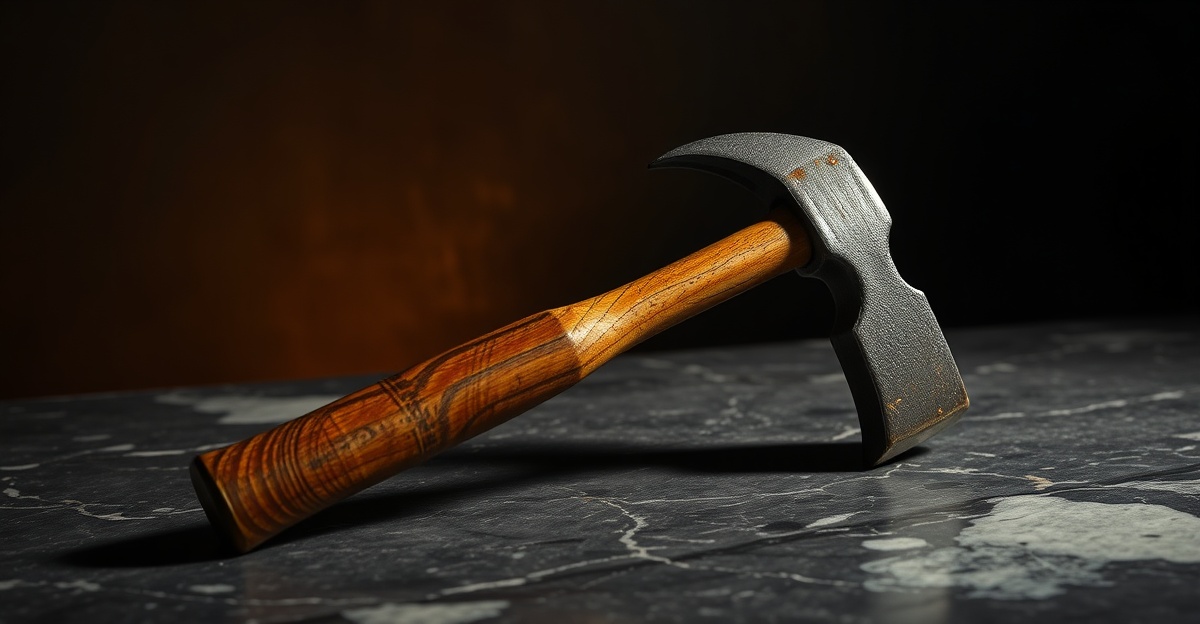
Clavicular's Hammer Routine: What He Told Impaulsive About Bonesmashing
On the Impaulsive podcast in May 2026, Braden Peters told Logan Paul and Mike Majlak he struck his own jaw with a hammer three or four times as a teenager. We unpack the full quote, what facial surgeons say about why this routine causes lasting harm, and how survivorship bias makes the retelling more dangerous than the practice.
On the Impaulsive podcast in May 2026, Braden Eric Peters, online as Clavicular, told Logan Paul and Mike Majlak something that landed differently than abstract forum talk about bonesmashing. He said he struck his own jaw with a hammer “three or four times” as a teenager, trying to reshape his jawline. He said his parents responded by hiding every hammer in the house. He said he switched to a sports trophy. The hosts laughed; the segment moved on. (TMZ)
The retelling matters more than the practice itself. The boy who hit himself with a hammer at 14 or 15 made one bad decision. The 20-year-old recounting it on a podcast with 5 million subscribers normalized the practice for a generation of viewers, framed as a quirky teenage chapter with visible survival as the punchline. This piece walks through the full quote, what facial surgeons say is actually happening when a person hits their face with a hammer, and why the survivorship-bias retelling does meaningfully more harm than the original injury.
The full quote
The Impaulsive segment as covered by TMZ and contemporaneous reporting:
Peters: as a teenager, he wanted to reshape his jawline. He took a hammer to his own jaw three or four times. His parents discovered what he was doing. They hid every hammer in the house. He switched to using a sports trophy as the impact tool. He framed the whole sequence as a story of teenage determination and parental intervention.
In the same conversation he claimed he was currently dating three women, with a fourth moving in, and said more of them said yes when he asked than he expected. The connection between the two anecdotes is unstated but operative: the implication is that the hammer worked. The jawline he has, the dating outcomes he has, the platform he has, all causally downstream of teenage commitment to the practice.
Why that implication is wrong
Three structural problems with the causal claim.
1. The hammer didn’t produce the jaw. Adult Clavicular’s jawline visible in photographs is the result of weight management (low body fat reveals the underlying bone structure), the bone structure he was born with (a meaningful portion of jawline appearance is genetic), and possibly cosmetic procedures (chin filler, jawline filler, masseter Botox in the looksmaxxing influencer cohort is common and routinely not disclosed). Multiple facial surgeons interviewed for our bonesmashing safety piece and in the wider 2026 coverage are clear that blunt-force trauma does not produce the kind of remodeling the forum-PSL framework claims. The jaw he has is not from the hammer; the jaw he has is despite the hammer.
2. The “Wolff’s Law” justification does not apply to acute trauma. Wolff’s Law describes bone’s adaptation to sustained mechanical loading, the slow stress patterns produced by weight-bearing exercise, chewing, walking. The biological response is osteoblast activation and gradual densification along the lines of stress. Acute blunt trauma produces a different response: micro-fractures, hematoma, callus formation, and remodeling that follows the injury pattern rather than the desired aesthetic outcome. Hitting bone with a hammer is not “mechanical loading” the way Wolff’s Law uses the term. We cover the full mechanism in is bonesmashing dangerous.
3. The dating outcomes are not the jaw. The framing in the Impaulsive segment treats the dating success as evidence of the jaw success, which treats the jaw success as evidence of the hammer success. The chain is structurally false at every link. The dating success, to the extent it is real and not exaggerated, is from being a 20-year-old livestreamer with a million followers and significant income. The hammer is window dressing on a different causal story.
What hitting your face with a hammer actually does
Facial surgeons covered in 2026 mainstream looksmaxxing coverage have been explicit. Dr. Josef Hadeed (Beverly Hills plastic surgeon), Dr. Michael Mrozinski (sports physician), and other clinical voices in the GQ Middle East, BuzzFeed, and Yahoo coverage of bonesmashing have all stated that the practice produces:
- Soft-tissue damage. Bleeding and bruising at minimum. Hematomas of the cheek or jaw that take weeks to resolve.
- Fracture risk. Especially for the zygomatic arch (cheekbone) and the mandible. A fractured zygoma can produce visible deformity, vision changes, and a surgical correction requirement.
- Inferior alveolar nerve damage. The IAN runs through the mandible and supplies sensation to the lower lip and chin. Damage produces numbness, often partially permanent. The “bonesmashing-induced facial numbness” pattern is documented in case reports.
- Dental complications. Cracked teeth, damaged restorations, jaw-joint (TMJ) injury producing chronic pain.
- Asymmetric healing. When any remodeling does occur, it follows the injury pattern, not the aesthetic intent. Asymmetric jaw outcomes are a documented bonesmashing complication that requires cosmetic-surgery correction to address.
The Wolff’s Law-based theoretical justification, “stress signals the bone to grow back stronger and sharper”, survives only at the level of “bone does respond to stress.” The leap from “responds to stress” to “responds to hammer blows by producing a sharper aesthetic” is unsupported by the clinical evidence and contradicted by the case reports.
Why the retelling is the real harm
The 14-year-old Peters who hit himself with a hammer was a kid making a bad decision. Many teenage boys make bad decisions; most of them resolve without lasting harm. If the story had ended there, it would be a footnote.
The 20-year-old Peters retelling the story on a podcast with millions of teenage-male listeners is a different category of event. Three mechanisms make the retelling worse than the original act.
Survivorship bias. The boys who tried the same practice and ended up with nerve damage, asymmetric healing, or dental complications do not appear on podcasts. The Impaulsive audience hears one outcome, the kid who survived visibly enough to be famous, and unconsciously generalizes from N=1 success to expected outcome. This is the same bias that makes lottery-winner stories sell tickets. The math doesn’t care; the audience response does.
Quirky-anecdote framing. Hosts on a chaos-friendly podcast do not push back on the practice as clinical harm. The frame is “teenage commitment, parental intervention, adult success.” That frame is durable; the medical reality is technical and easily tuned out. Teenagers do not weight academic medical descriptions against narrative anecdote evenly.
Implicit causal claim. The connection between the hammer routine and the visible adult jawline is unstated and operative. Listeners infer “the hammer worked” because the storyteller’s adult appearance is consistent with the framing. The inference is wrong (see above) but persuasive.
Tiktok’s April 2026 decision to block “bone smashing” as a search term came from this pattern, high-profile retellings of the practice were producing real upticks in young men attempting it. Removing the search term reduces the discoverability; it does not address the retellings on platforms with no such restriction (podcasts, X, off-platform clip economies).
What parents should do with this information
If your son has mentioned Clavicular or the hammer story, the script from if your son watches Clavicular applies. The specific addition for this anecdote:
- Address the practice factually, not moralistically. “I read about that thing he said on the podcast. The medical stuff says it doesn’t work and it can cause nerve damage.” Not: “Don’t you dare hit yourself with a hammer.”
- Ask what he was hoping it would change. The hammer story is downstream of the underlying body-image concern. The upstream conversation is where the change happens.
- Watch for the specific warning signs: unexplained bruising on the jaw, cheekbones, or brow ridge; found objects used as impact tools; mirror-tapping behaviors. Any of these warrants a pediatrician visit; do not wait.
- Offer alternative reference points. QOVES Studio and Dr. Anthony Youn both produce face-analysis content without the self-injury layer.
What adult viewers should do
If you are reading this because you have considered bonesmashing yourself:
- Read is bonesmashing dangerous for the full mechanism.
- The 1.5–2 PSL points of softmaxxing upside most people leave unworked is a much higher ROI target than the bone structure ceiling. Body composition, grooming, hair, skin, fitness, and presentation move the needle further than the bone structure does, and they do not require hospital visits.
- If the bone structure question is genuinely the bottleneck, and for some people it is, talk to a board-certified facial plastic surgeon. Genioplasty, chin filler, masseter Botox, and orthognathic surgery are the procedures that actually move the metrics. They cost money; they have real recovery; they have documented success rates. They are also reversible-ish or at least clinically understood, unlike the hammer.
The closing
The Impaulsive segment is going to do more measurable harm than most podcast bits ever do, not because the host or the guest intended harm but because the retelling has a structural amplification effect that the medical literature does not. The right counterweight is making the clinical reality at least as easy to find as the anecdote. That is the function of this piece and our bonesmashing safety coverage. The hammer does not work. The boys who tried it and ended up worse than they started are real. The kid on the podcast laughed his way through the segment because he survived. Most do not have that luck twice.
Sources: TMZ, Clavicular Talks Bone Smashing And Dating Many Girls, Yahoo Entertainment, 14 Incel Trends, GQ Middle East, What Is Bonesmashing, News USA Today, Bonesmashing Dangerous Trend, UniladTech, Bone Smashing Warning.
Frequently Asked Questions
What did Clavicular say on Impaulsive?
On the Impaulsive podcast in May 2026, Peters told Logan Paul and Mike Majlak he struck his own jaw with a hammer three or four times as a teenager trying to reshape his jawline. He said his parents hid every hammer in the house in response, and he switched to a sports trophy.
Did the hammer routine work?
No. Visible jawline definition in adult Peters is the result of weight management, bone structure (largely genetic), and possibly cosmetic procedures — not from blunt-force trauma. Multiple facial surgeons including Dr. Josef Hadeed (Beverly Hills plastic surgeon) and Dr. Michael Mrozinski (sports physician) have stated that bonesmashing does not produce the claimed remodeling and instead causes bleeding, bruising, soft-tissue damage, fractures, and possible nerve injury.
Why is the retelling dangerous?
Survivorship bias. The 20-year-old who survived a self-injury practice visibly enough to retell it as a quirky origin story is more persuasive to a teenage audience than the academic descriptions of the harm. The boys who tried the same practice and ended up with nerve damage, asymmetric healing, or dental complications do not appear in the retelling because they are not on podcasts.
What does bonesmashing actually do to the face?
Soft-tissue damage (bleeding, bruising), risk of fracture, possible damage to the inferior alveolar nerve (which runs through the mandible and supplies sensation to the lower lip and chin), dental complications, asymmetric healing if any remodeling does occur, and chronic pain. The Wolff's Law-based theoretical justification does not survive contact with how bone actually responds to acute trauma rather than sustained mechanical loading. See our detailed [bonesmashing safety piece](/en/looks/is-bonesmashing-dangerous/) for the full mechanism.
Are facial bones supposed to change shape under stress?
Slowly and partially, under sustained mechanical loading — the chewing-derived stress that produces the variation in mandibular angle across populations is the closest natural analog. Acute blunt trauma is not the same mechanism. Wolff's Law describes adaptation to load, not adaptation to injury.
Did Logan Paul push back?
The Impaulsive segment was framed as a quirky anecdote, not a clinical discussion. The hosts did not provide medical context. This is part of the structural problem with looksmaxxing creators on mainstream podcasts — the venues do not have the framework to challenge the practices being normalized.
Is this kind of self-injury common in looksmaxxing?
Bonesmashing-related self-injury is one of the warning signs pediatricians and child psychologists quoted in 2026 mainstream coverage are flagging most loudly. TikTok blocked the search term 'bone smashing' in April 2026 specifically because of how many young men were attempting the practice. The retelling of one creator's hammer routine on a major podcast does not help.
What should I do if my son mentions Clavicular's hammer thing?
Address it directly, factually. The practice does not work, it causes nerve damage, the influencers showing 'results' are not showing the boys who ended up with permanent numbness. Then ask what he was hoping it would change. The technique conversation is downstream; the self-image conversation is upstream. See [if your son watches Clavicular](/en/looks/if-your-son-watches-clavicular/).
Has Clavicular continued doing this?
He did not say whether he still uses the practice. The Impaulsive framing treated it as a teenage chapter. The structural problem is that the retelling normalizes the practice for the next cohort of teenage boys regardless of whether the creator himself still does it.