
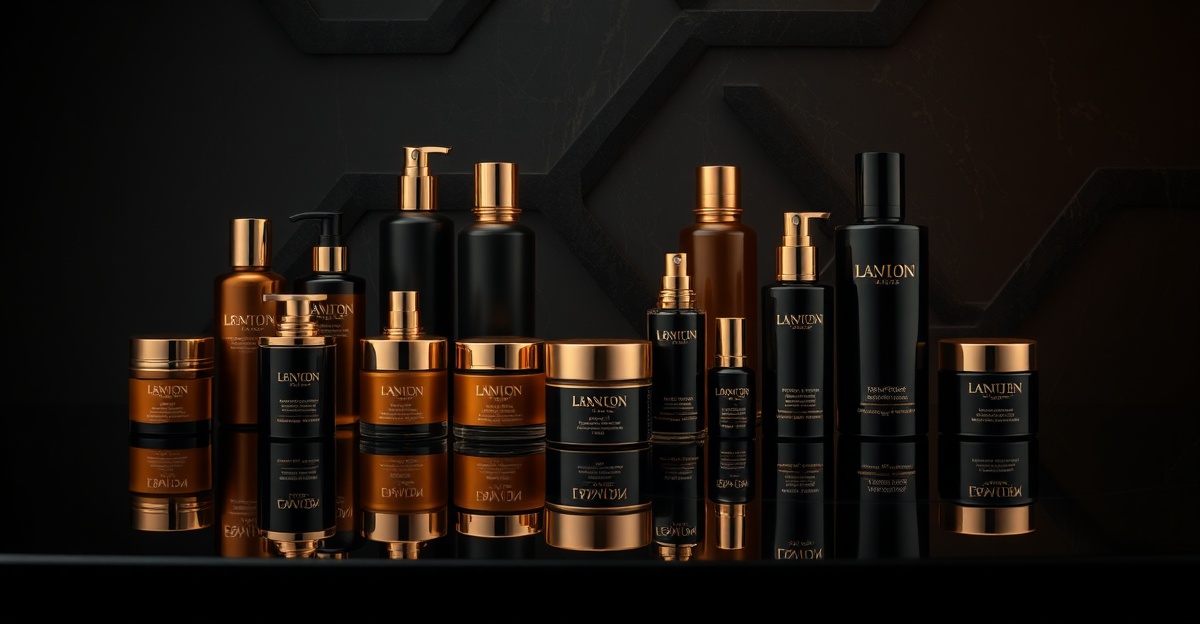
Best Skincare Products for Looksmaxxing in 2026
The skincare products that actually matter for looksmaxxing. Product categories, routines, and budget vs premium — no brand deals, just what works.
Why Skincare Is the Highest-ROI Looksmaxxing Move
Clear, healthy skin changes how your entire face reads. It’s the foundation everything else sits on — your jawline, your eye area, your beard, all of it looks better when your skin is good.
The problem? The skincare industry is designed to confuse you. Thousands of products, contradictory advice, and influencers pushing whatever brand pays them this month. You don’t need 12 products. You need the right categories, in the right order, consistently.
This guide covers product categories — not brands. Brands change. The active ingredients that work have been the same for decades.
The Non-Negotiable Three
If you do nothing else, do these three things. Every single day. Forever.
1. Cleanser
Your cleanser removes dirt, oil, sunscreen, and dead skin cells. Without it, everything else you put on your face sits on top of grime.
- What to look for: Gentle, pH-balanced (around 5.5), non-foaming or low-foaming. Look for “gel cleanser” or “cream cleanser.”
- What to avoid: Bar soap on your face (too alkaline, strips your moisture barrier), anything that makes your skin feel “squeaky clean” (that’s damage, not cleanliness).
- Budget option: Any basic gel cleanser with no fragrance. Seriously, this is the product where cheap works fine.
- How to use: Morning and night. Lukewarm water. Massage for 30-60 seconds. Rinse.
2. Moisturizer
Moisturizer maintains your skin barrier — the protective layer that keeps moisture in and irritants out. Skip this and your skin overproduces oil to compensate, leading to breakouts and a greasy look.
- What to look for: Ceramides, hyaluronic acid, glycerin. These are hydrating ingredients that work for basically everyone.
- What to avoid: Heavy fragrances, alcohol-based formulas (they dry you out), anything that feels like it sits on top of your skin without absorbing.
- Oily skin? You still need moisturizer. Use a lightweight gel moisturizer instead of a cream.
- Dry skin? Go for a richer cream with squalane or shea butter.
- How to use: Morning and night, after cleansing (and after actives, if you use them).
3. SPF (Sunscreen)
This is the single most important anti-aging product that exists. UV damage causes wrinkles, dark spots, uneven texture, and collagen breakdown. Every looksmaxxing skincare tip you follow is undermined if you’re not wearing sunscreen.
- What to look for: SPF 30 minimum, broad spectrum (UVA + UVB). SPF 50 is better if you’ll be outside.
- Types: Chemical (absorbs UV, lighter feel, sometimes stings eyes) vs. mineral (reflects UV, can leave a white cast on darker skin, usually gentler).
- For dark skin: Chemical sunscreens avoid the white cast issue. Or look for tinted mineral sunscreens.
- How to use: Every morning. Apply generously — most people use less than half the amount needed. Reapply every 2 hours if you’re in direct sunlight.
If your entire skincare routine is cleanser, moisturizer, and SPF — you’re ahead of 90% of guys. Everything below this is optimization.
The Power Actives
These are the products that actually change your skin over time. They’re not cosmetic cover-ups — they alter skin cell behavior.
Retinoids (Vitamin A Derivatives)
Retinoids are the gold standard for skin improvement. They increase cell turnover, boost collagen production, reduce acne, fade dark spots, and smooth texture. If you could only add one active to your routine, this is it.
- Start slow. Retinol 0.3% or retinaldehyde 0.05%, 2 nights per week. Build up to nightly over 4-6 weeks.
- Expect purging. Your skin may break out for 2-4 weeks as it adjusts. This is normal. Push through it.
- Use at night only. Retinoids break down in sunlight. Always follow with SPF in the morning.
- Budget: Over-the-counter retinol works. Concentrations of 0.3-1% are effective.
- Premium: Prescription tretinoin (0.025-0.1%) is stronger and has more research behind it. Ask your dermatologist or use an online derm service.
- Timeline: Visible results in 8-12 weeks. Full benefits at 6-12 months.
Niacinamide (Vitamin B3)
The Swiss army knife of skincare. Niacinamide does a lot of things decently well:
-
Reduces pore appearance
-
Controls oil production
-
Fades post-acne dark spots
-
Strengthens the skin barrier
-
Reduces redness
-
Concentration: 5% is the sweet spot. 10% works too but can cause irritation in some people.
-
How to use: Morning and/or night, after cleansing, before moisturizer.
-
Plays well with everything. Niacinamide is compatible with retinoids, vitamin C, BHAs — all of it.
-
Budget: This is one of the cheapest actives. No need to go premium.
Vitamin C (L-Ascorbic Acid)
Vitamin C is an antioxidant that brightens skin, fades dark spots, and provides some UV protection (not a replacement for sunscreen). It makes your skin look more even and alive.
- Concentration: 10-20% L-ascorbic acid. Below 10% is too weak. Above 20% just causes irritation without extra benefit.
- pH matters. Vitamin C works best at a low pH (around 3.5). Look for formulas that specify this.
- Unstable. Vitamin C oxidizes when exposed to air and light. Buy small bottles, store them in a dark place, and toss them if the liquid turns brown or orange.
- How to use: Morning, after cleansing, before moisturizer and SPF. Pairs excellently with SPF for maximum UV defense.
- Budget: Vitamin C is one category where cheaper products often oxidize faster. Mid-range is worth it here.
BHA (Salicylic Acid)
If you’re acne-prone or have oily skin, BHA is your best friend. It’s oil-soluble, which means it penetrates into pores and dissolves the sebum that causes blackheads and breakouts.
- Concentration: 2% is standard and effective.
- How to use: 3-4 times per week after cleansing. You don’t need to use it daily.
- Great for the nose and forehead. These areas have the most oil production.
- Don’t combine with retinoids on the same night. Too much exfoliation at once damages your barrier. Alternate nights.
AHA (Glycolic Acid / Lactic Acid)
AHAs work on the skin’s surface, dissolving dead cells and revealing smoother, brighter skin underneath.
- Glycolic acid: Strongest AHA, best for normal to oily skin. 5-10% for regular use.
- Lactic acid: Gentler, better for sensitive or dry skin. 5-10%.
- How to use: 2-3 times per week at night. Not on the same night as retinoids.
- Great for texture and dullness. If your skin looks flat and rough, AHAs fix that.
Building Your Routine
Here’s how to stack everything. You don’t need all of these — build up gradually.
Morning:
- Gentle cleanser (or just rinse with water if your skin is dry)
- Vitamin C serum
- Niacinamide (can layer over vitamin C or use a product that combines them)
- Moisturizer
- SPF (always last, always generous)
Night:
- Cleanser (double cleanse if you wore SPF — oil cleanser first, then gel cleanser)
- Active treatment: Retinoid (Mon/Wed/Fri) OR BHA (Tue/Thu) OR AHA (Sat). Not all on the same night.
- Niacinamide (if not used in the morning)
- Moisturizer
Starting from zero? Don’t add everything at once. Start with cleanser, moisturizer, and SPF for two weeks. Then add one active at a time, one per month. This way you can identify what’s working and what’s causing issues.
Budget vs. Premium — Where to Spend
Not all skincare needs to be expensive. Here’s where to save and where to invest:
Save (cheap works fine):
- Cleanser — a basic gel cleanser does the job
- Moisturizer — ceramide-based drugstore options are excellent
- Niacinamide — cheap ingredient, cheap products work
- BHA — 2% salicylic acid is 2% salicylic acid
Spend more:
- SPF — a good sunscreen that you’ll actually wear every day is worth paying for (texture, no white cast, no sting)
- Vitamin C — cheap formulas oxidize fast and become useless
- Retinoids — prescription tretinoin is more effective than OTC retinol, worth the dermatologist visit
Skip entirely:
- Collagen creams (collagen molecules are too big to penetrate skin)
- “Detox” products (your skin doesn’t need detoxing)
- Most toners (unless they contain an active like BHA or niacinamide)
- Anything marketed as a “miracle” or “overnight transformation”
Common Mistakes
Using too many products at once. Your skin needs time to adapt. Introducing five new products simultaneously guarantees irritation and makes it impossible to know what’s working.
Skipping SPF because you “don’t burn.” UV damage is cumulative and mostly invisible until it’s too late. Dark skin has more natural protection but still benefits massively from SPF.
Expecting instant results. Skincare works on a cellular level. Most actives take 4-12 weeks to show results. If you quit after two weeks, you wasted your money.
Over-exfoliating. Using BHA, AHA, and retinoids all at once will destroy your skin barrier, leading to redness, sensitivity, and more breakouts. Pick one or two, alternate nights, and listen to your skin.
Ignoring your neck. Everything you do to your face should extend to your neck. Your neck ages faster than your face and most guys completely ignore it.
Your Product Gameplan
- Start today: Cleanser + moisturizer + SPF. Do this for two weeks.
- Week 3: Add niacinamide (morning).
- Week 6: Add retinol (start with 0.3%, two nights per week).
- Week 10: Add BHA if you’re acne-prone (alternate with retinol nights).
- Week 14: Add vitamin C (morning, before SPF).
- Ongoing: Increase retinol concentration gradually. Consider prescription tretinoin after 6 months if you want to level up.
Skincare isn’t complicated. It’s consistent. The guy who uses three products every day for a year will have better skin than the guy who uses ten products for two weeks and quits. Start simple. Stay consistent. Your future face will thank you.
Frequently Asked Questions
Can I really improve this area without surgery?
Yes. Grooming, skincare, contouring techniques, hairstyle choices, and fitness can significantly improve how any feature looks. Surgery is a last resort, not a first step.
How long do non-surgical improvements take?
Most non-surgical improvements (skincare, muscle building around the area, grooming) show results within 4-12 weeks of consistent effort.
What exercises help?
Targeted exercises, good posture, and overall fitness all contribute. A lean body composition at 12-18% body fat reveals bone structure and muscle definition most effectively.
Should I consider cosmetic procedures?
Only after exhausting non-surgical options and consulting board-certified professionals. Many people overestimate their need for surgery and underestimate what grooming and fitness can achieve.
Does genetics determine everything?
Genetics set the range, but lifestyle determines where you land within it. Skin quality, body composition, grooming, and style are all modifiable regardless of genetic baseline.
What is the most cost-effective improvement?
Proper grooming and skincare for the area. A targeted routine costs under $50/month and delivers the highest ROI before considering any procedures.
Are before-and-after photos reliable?
Be skeptical. Lighting, angles, and editing dramatically affect before/after comparisons. Look for consistent conditions and realistic timelines in transformation photos.
When should I see a specialist?
If you have a medical concern (persistent acne, hair loss, asymmetry causing functional issues), see a dermatologist or relevant specialist before attempting DIY treatments.