
PSL Rating Scale Explained — What the Numbers Mean
What is the PSL rating scale? How it works, why it's harsher than a normal 1-10, and what the looksmaxxing community actually means by each number.
What PSL Actually Stands For
PSL stands for PuaHate/Sluthate/Lookism — three forums that shaped the early looksmaxxing community. These platforms (most now defunct or rebranded) developed their own rating system for facial attractiveness, and it spread to the broader looksmaxxing world.
The PSL scale runs from 1 to 10, just like the rating system most people know. But here’s the thing that confuses newcomers: a 5 on the PSL scale doesn’t mean “average looking” in the way you’re probably thinking. The scale is deliberately calibrated to be much harsher than what most people use in daily life.
Understanding the PSL scale helps you navigate looksmaxxing discussions without getting confused — or getting demoralized by a rating that seems brutally low.
How the PSL Scale Works
In everyday conversation, most people use the 1-10 scale with grade inflation. A “7” in casual talk usually means “above average, decent looking.” An “8” means “pretty attractive.” People rarely give ratings below 4 unless they’re being mean.
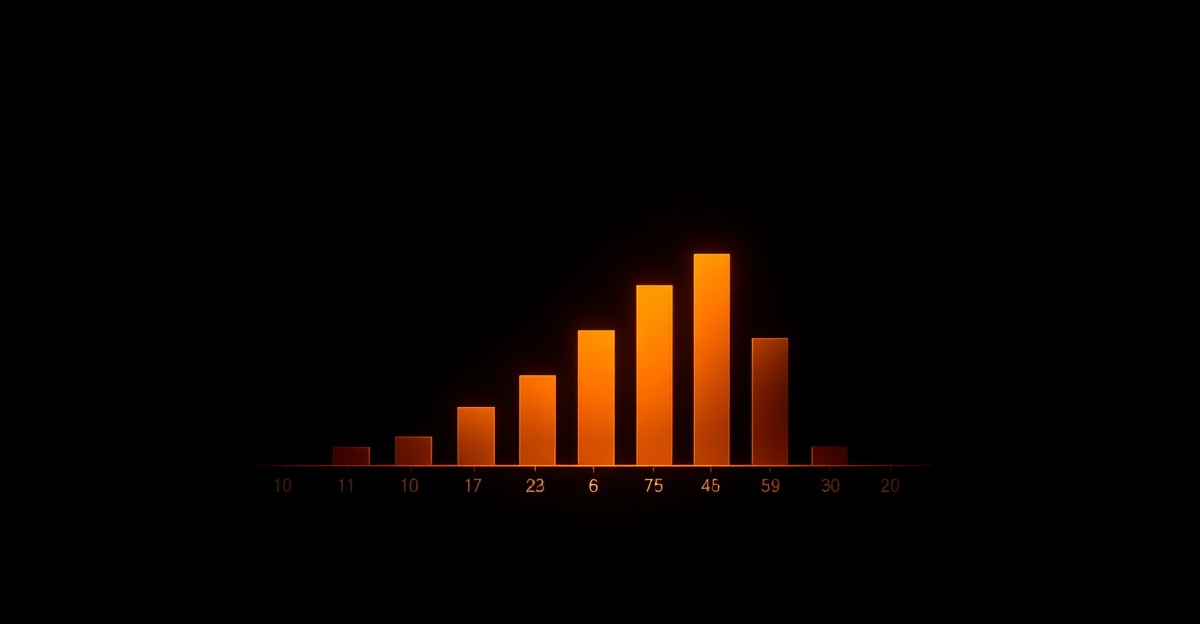
The PSL scale intentionally removes that inflation. It attempts to rate facial aesthetics on a roughly normal distribution, where most people cluster around the middle and truly exceptional looks are rare.
Here’s what each PSL rating generally means:
PSL 1-2: Significantly below average. Severe facial disharmony, multiple features that are far outside typical proportions. This rating is extremely rare in reality.
PSL 3: Below average. Noticeable asymmetry or unfavorable feature ratios, but nothing extreme. Most people would call this “unattractive” in everyday terms.
PSL 4: Slightly below average. You have some good features but also some that hold you back. In normal conversation, people might call you “okay” or “not my type.” This is where a lot of guys actually fall, despite thinking they’re lower.
PSL 5: Average to slightly above. Your features are harmonious enough that nothing stands out as a negative. In normal social rating, this person would be called a “6” or “7.” Seriously — a PSL 5 is a genuinely decent-looking person.
PSL 6: Clearly above average. Strong jawline, good proportions, facial harmony. People in your daily life would call you “attractive” or “good-looking.” In normal rating terms, this is an “8.”
PSL 7: Very attractive. Model-tier facial aesthetics. Strong bone structure, excellent proportions, no significant flaws. This is where you’d see working models and very attractive public figures. A PSL 7 is probably what most people would call a “9” or “10.”
PSL 8+: Exceptionally rare. Near-perfect facial harmony and structure. The community generally considers PSL 8+ to be almost unreachable. Some argue no one is genuinely above 8 without photographic trickery.
The Key Difference: Deflation, Not Inflation
The easiest way to translate between PSL and normal ratings:
Your PSL rating is roughly your “normal” rating minus 1.5 to 2 points.
So if your friends and family would honestly say you’re a “7 out of 10,” the looksmaxxing community might rate you a PSL 5 or 5.5. That’s not an insult — it’s just a different scale.
This deflation exists because the PSL scale tries to anchor to objective facial measurements (interpupillary distance, facial thirds, jawline angles, etc.) rather than subjective “vibes.” It also tries to control for factors like body, style, and charisma, which inflate ratings in real life but aren’t about your actual facial structure.
What Gets Rated
PSL ratings focus specifically on facial aesthetics. The community typically evaluates:
Bone structure:
- Jawline definition and width
- Cheekbone projection
- Chin projection and shape
- Brow ridge
- Overall facial width-to-height ratio
Eye area:
- Canthal tilt (positive vs negative)
- Upper eyelid exposure
- Inter-eye distance
- Brow position
- Under-eye area (hollows, dark circles)
Nose:
- Proportionality to face
- Bridge width and height
- Tip definition
- Nostril shape
Mouth and teeth:
- Lip fullness and proportion
- Philtrum length
- Teeth alignment and color
- Smile aesthetics
Skin and hair:
- Skin clarity and texture
- Hairline and density
- Facial hair growth pattern (if applicable)
What’s typically NOT included in a pure PSL rating:
- Body composition and fitness
- Height
- Style and grooming
- Personality and charisma
- Status and wealth
This is a deliberate choice — the scale tries to isolate facial genetics and structure from everything else. In reality, attractiveness obviously includes all those other factors, which is partly why PSL ratings feel harsh.
Why People Use It
You might wonder why anyone would voluntarily submit to a harsher rating system. A few reasons:
Honest feedback. The PSL community prides itself on brutal honesty. If you post on a looksmaxxing forum asking for a rating, you’ll get an unfiltered assessment rather than the polite responses you’d get from friends. For guys who want to know exactly where they stand and what to improve, this directness has value.
Actionable specificity. Because PSL raters focus on individual features, the feedback is often specific: “Your midface ratio is long, consider growing a beard to shorten it visually” or “Positive canthal tilt is your best feature, highlight your eye area.” This is more useful than “you look fine, bro.”
Community language. PSL ratings are the common currency of looksmaxxing forums. If someone says “I went from PSL 4.5 to 5.5 with jaw surgery,” everyone in the community immediately understands the magnitude of that change.
The Problems with PSL Ratings
The PSL scale has real limitations, and you should understand them before taking any rating too seriously.
It’s still subjective. Despite the attempt to anchor to measurements, different raters consistently give the same person different scores. A photo posted on three different forums might get PSL 4.5, 5.5, and 6. The “objectivity” is more aspirational than real.
It ignores context. Attractiveness in real life isn’t just bone structure. How you carry yourself, how you dress, your energy, your voice — all of these matter enormously. A PSL 5 with great style, fitness, and confidence will be more attractive in practice than a PSL 6.5 who dresses poorly and has zero charisma.
It can be toxic. Spending too much time getting rated by anonymous internet strangers is not great for your mental health. Some guys develop genuine body dysmorphia from obsessive PSL rating culture. If you’re checking forums multiple times a day for ratings, step back.
Lighting and angles matter absurdly. The same person can look like a PSL 4 or PSL 6 depending on the photo. Harsh overhead lighting, unflattering angles, and wide-angle lens distortion can easily swing a rating by 1-2 points. Forum raters know this but still fall for it.
It’s male-focused by design. The PSL scale was developed primarily by and for men rating men. Female attractiveness is discussed too, but the measurement criteria and the community knowledge base are heavily skewed toward male facial aesthetics.
Ethnic bias is real. The scale was developed in Western-dominated forums, and the aesthetic ideals it centers tend to be Eurocentric. This doesn’t mean non-Western features can’t rate highly, but the system’s defaults and reference points reflect its origins. Be aware of this when interpreting ratings.
How to Actually Use PSL Ratings
If you’re going to engage with the PSL system, here’s how to do it without it messing with your head.
Get rated once, then move on. A rating gives you a general baseline. It shouldn’t be something you check repeatedly. Get a sense of where you are, understand the specific feedback, and then focus on improvement rather than numbers.
Focus on the feedback, not the number. “Your jaw is recessed” is useful information. “You’re a 4.2” is just a number that’ll make you feel bad. Extract the actionable parts and ignore the score itself.
Use multiple opinions. One rater’s opinion is meaningless. If five different people say your midface is long, that’s useful data. If one person says it, they might just have unusual preferences.
Don’t compare yourself to celebrities. PSL raters love to reference male models and actors as benchmarks, but these people are genetic outliers often enhanced by professional photography, lighting, makeup, and sometimes surgery. Comparing yourself to Sean O’Pry is like comparing your bench press to an Olympic lifter.
Remember what the scale leaves out. Your real-world attractiveness includes fitness, grooming, style, personality, humor, status, and a hundred other things the PSL scale deliberately ignores. A lower PSL rating doesn’t mean you can’t be highly attractive in practice.
The Bottom Line
The PSL scale is a tool — a flawed, harsh, internet-culture tool, but a tool nonetheless. It’s useful for understanding looksmaxxing community discussions and for getting brutally honest feedback on specific facial features.
Just don’t build your self-worth around it. The guys who benefit most from PSL culture are the ones who get rated, extract the useful feedback, and then go work on themselves. The guys who spiral are the ones who refresh the forum waiting for validation that never comes.
You’re more than a number on a scale some anonymous forum users made up.
Frequently Asked Questions
Where did this term originate?
Most looksmaxxing terminology originated in online forums (lookism.net, looksmax.org, Reddit) between 2010-2020, often from incel and pickup artist communities before entering mainstream culture.
Is this term used seriously?
Context matters. Some terms are used analytically, others ironically, and some pejoratively. In looksmaxxing communities, most terms are used as shorthand for specific concepts.
Should I use this terminology?
Understanding the vocabulary helps you navigate looksmaxxing communities. Using it in everyday conversation is generally unnecessary and can seem out of touch.
Is the concept behind this term scientifically valid?
Validity varies widely. Some concepts (halo effect, body composition) are well-researched. Others (bonesmashing, specific PSL metrics) lack scientific support.
How has this term evolved over time?
Looksmaxxing terminology evolves rapidly. Terms shift meaning as they move from niche forums to TikTok to mainstream media. The glossary reflects current common usage.
Are these terms used globally?
Most looksmaxxing terms originate in English but have spread globally through social media. Some terms get localized, while others (like mewing, mogging) stay in English.
What is the most misunderstood looksmaxxing term?
Looksmaxxing itself. Media often frames it as extreme or dangerous, when most practitioners simply focus on basic grooming, fitness, and style optimization.
Where can I learn more looksmaxxing terminology?
Our complete glossary covers every major term. For cultural context, Reddit communities like r/looksmaxxing and YouTube analyses provide ongoing discussion.